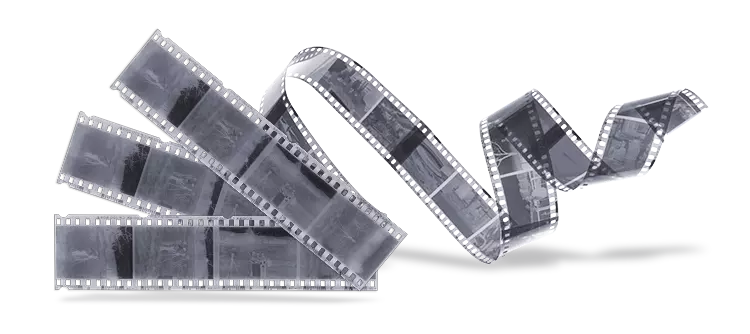
If you’re a photographer that used film cameras back in the day and processed your own negatives and or prints, you’ll probably agree nothing is quite as magical as seeing images come to life in the darkroom! Although scanning B&W negatives may not be quite as magical, it is a worthy pursuit because you may uncover long-forgotten family memories and wonderful images you shot decades ago. In addition to their historic, artistic, and nostalgic value, scanning black and white negatives is essential because they can deteriorate. These four issues are primary contributing factors:
Too often, old negatives are stored carelessly in less than optimal conditions. Yet even with proper storage, the following issue is a notorious culprit that frequently damages the picture quality of black and white negatives.

All you have to do is ship us your photos and we will get to work on scanning your black and white images for you.

Your black & white film gets manually scanned & repaired. Your film will be transferred at our Indianapolis lab with a 5 - 6 weeks turnaround time.
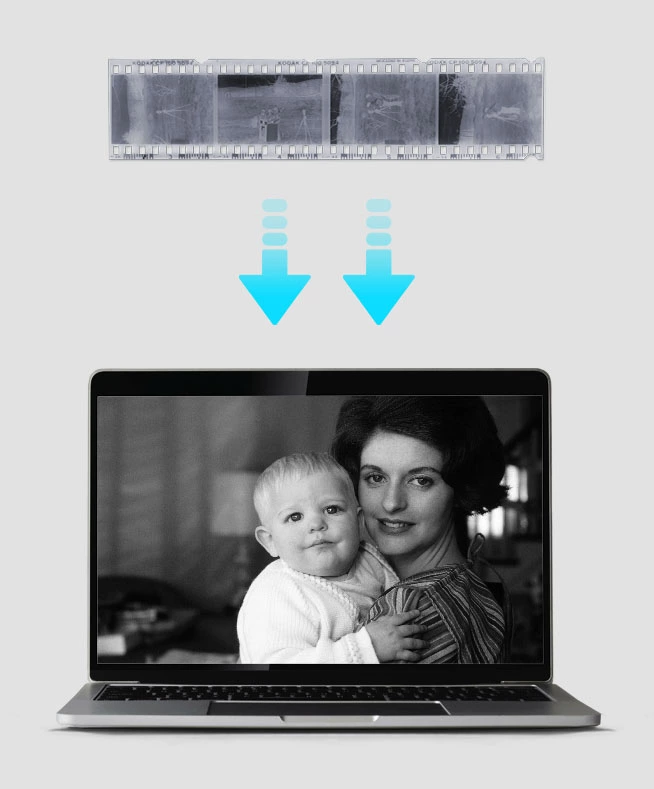
By the end of the process, you have all your negatives digitized and available for digital download or USB drive.
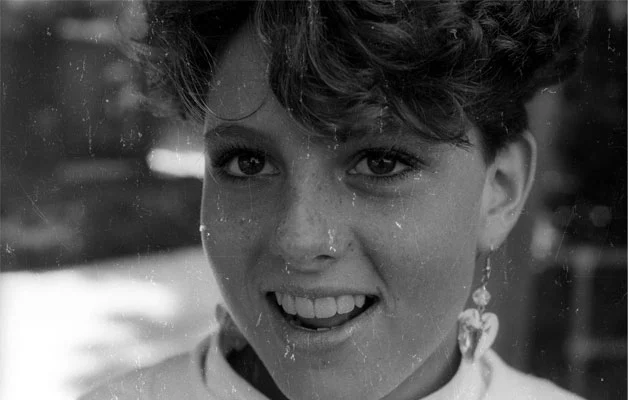
A typical amount of scratching on a black and white negative. Photo: W Bradley.
Negatives are prone to scratching, and especially black and white negatives. Color negatives have dyes that fade over time, while black and white negatives have a single layer of light sensitive silver halides converted into silver metal during processing. These grains easily scratch the surface of the negative, even when handled gently (jostling inside the negative envelope itself can often be enough to scratch the film). Most of the time, these tiny scratches are invisible to the naked eye. Unfortunately, when these negatives are scanned and enlarged, numerous larger scratches are revealed that may severely mar the picture quality or even ruin it completely. To compound this problem, dust particles on the surface of black and white negatives are much more noticeable than on color negatives.
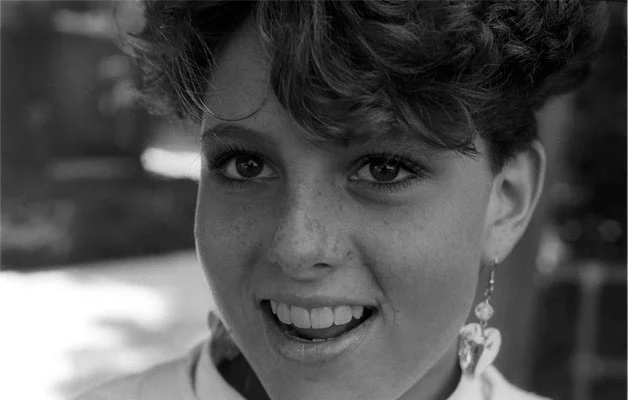
The same photo as above, handled under our new process, for $0.48 an image.
We understand many serious photographers have large analog archives of negatives, however not everyone has the time, desire, or top-notch equipment to properly digitize negatives. Scanning black and white negatives the right way requires training and advanced scanning capabilities. After months of research and testing with some of our professional customers, we launched a black and white negative scanning service that reflects the top quality ScanCafe is known for, with additional benefits that yield the best digital images. With our service, you’ll no longer have to worry about how to scan black and white negatives nor shell out thousands of dollars on a professional scanner for great results.
At ScanCafe, we've pioneered a number of industry best practices to guarantee the safety of your precious memories at our state-of-the-art lab and in transit, including door to door tracking and the following:
At ScanCafe, we give you the option to discard up to 20% of your final order. This means you don't have to make a hard choice between affordability and quality when you preserve your black and white memories.
When professional scanning services digitize color negatives, many frequently rely on software alone to remove scratches. This approach is effective if scratches are relatively small and a typical color process was used to process the negatives. With black and white negatives, silver halide grains cause artifacts in the scan that don’t produce a clean image. Consequently, many services don't offer black & white negatives scanning – or, if they do, scratch removal isn’t included. The end result can be unacceptable, like the scratched image shown above.
If time hasn’t been kind to your negatives, we suggest checking out our photo restoration service that offers an array of benefits including more extensive repairs.
Most people have thousands of pictures in different formats. Over time, it's common for slides, negatives, prints, and videos to shift in color, fade, and get damaged. Professional scanning restores and preserves these precious memories so you can enjoy them for years to come. Scanning photos also provides other benefits, including:
If most of your photo collection is comprised of negatives, scanning them is preferred to prints because:
Absolutely. It is critical that we get as much of the original photograph as possible. You can refer to our restoration gallery for examples of torn photos that have been restored.
Our office hours are 9:30 am to 5:00 pm EST Monday to Friday, closed Saturday and Sunday. During office hours, we make every effort to respond to emails within six hours and return voice mails within four hours.